How should dog clothes fit?
Snug enough to stay put, loose enough to move in. You should be able to slide two fingers under the neck and chest, the back should finish just above the tail, and your dog should walk, sit, stretch and toilet exactly as they do without it. If anything pulls, rubs or flaps, the size is wrong.
Fit is the difference between a dog who forgets they are dressed and one who spends the evening trying to reverse out of their clothes. It matters more than colour, more than style, and honestly more than fabric. The softest bamboo cotton in the world still rubs if it is a size too small.
The good news is that getting it right takes about five minutes and a soft tape measure. Our size guide shows exactly where to measure. This article is about what happens next: how to read the numbers, and how to check the fit once the garment is on.
Which measurement matters most?
The chest. Chewy’s measuring guide calls chest girth arguably the most important measurement, and we agree. It is the widest part of your dog, so if the chest fits, the rest usually follows. Measure it just behind the front legs, around the deepest part of the ribcage, with your dog standing naturally.
The neck comes next. Measure around the base of the neck, just above the shoulders, where a collar naturally sits. A neckline that is too tight is uncomfortable straight away. One that is too loose lets the garment slide back and bunch around the front legs.
Back length decides where the garment ends. The Chewy guide measures from the base of the tail to the collar, and suggests the garment should sit one to three inches above the tail. Too long, and it gets in the way when your dog goes to the toilet.
What does a good fit look like on your dog?
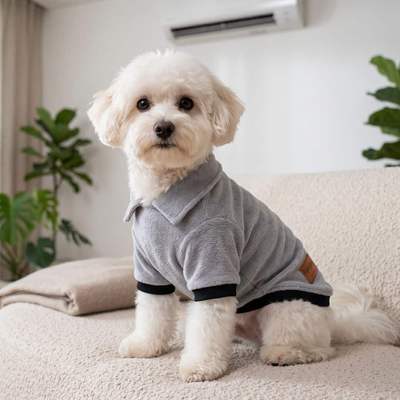
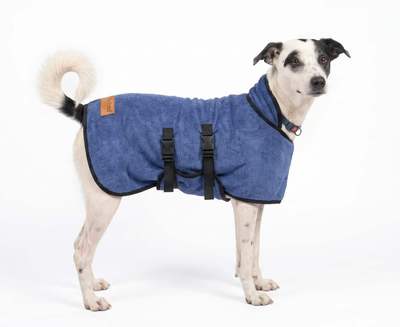
Smooth across the back, with no pulling at the shoulders and no bunching behind the front legs. You can slide two fingers under the neck and the chest. The armholes sit clear of the armpits, the hem finishes just above the tail, and your dog moves, sits and lies down exactly as they normally would.
The two-finger check is the quickest test you can do. Slip two fingers flat under the fabric at the neck, then at the chest. If they slide in easily, you have room. If you have to push, it is too tight. If you can fit your whole hand, it is probably too loose.
Then watch your dog move. The AKC’s guide to dog sweaters says a well-fitting garment should let your dog move normally without restricting them. Walk them around the room, let them sit and lie down, and watch the shoulders and front legs. Nothing should drag, twist or pinch.
How do you know if dog clothes are too tight?
Your fingers will not slide under the neck or chest, the fabric pulls across the shoulders, and your dog walks stiffly or sits awkwardly. Some dogs freeze on the spot. Others keep trying to back out of the garment. After a wear, look for red marks at the armholes or neck. Any of these means go up a size.
Too tight is the easiest mistake to make, and it is easy to understand. People want a neat, snug look, so they pick the smaller of two sizes. On a dog, snug quickly becomes restrictive, especially around the front legs, which do most of the work when they walk.
It is worth remembering that dogs cannot tell you something pinches. They just go quiet, move less, or scratch at it later. If your usually bouncy dog turns into a statue the moment the shirt goes on, that is your answer.
How do you know if dog clothes are too loose?
The garment slides sideways, bunches under the belly, or hangs so low it catches the back legs. Loose necklines slip back and gather around the front legs. The AKC warns against clothes that are too big for exactly this reason, since extra fabric can tangle. A little ease is good. Flapping is not.
Loose is usually less uncomfortable than tight, which is why going up a size is the safer mistake. But there is a limit. If your dog can step out of the garment, or the hem drags on the floor, it is too big to be useful and worth swapping.
Length is the part people misjudge most. A garment that is the right width but too long ends up sitting over the base of the tail, which gets in the way when your dog needs to go.
What if your dog is between two sizes?
Go up. Chewy’s measuring guide says the same: if your dog is between sizes, size up. A slightly roomy garment still lets your dog move, sit and toilet normally, while a slightly tight one rubs at the neck and armholes from the first minute. Check the chest measurement first, because it usually decides.
Our T-shirt and hoodie have a relaxed cut, so the size up still looks tidy rather than baggy. Our bathrobe is even more forgiving, because its two buckles adjust under the belly.
Should you size dog clothes by weight or breed?
Only as a rough starting point. Two dogs of the same weight or breed can be shaped completely differently. A deep-chested dog and a barrel-shaped one might weigh the same and need different sizes. Measure the neck, chest and back length, then match those numbers to the brand’s chart.
Our size chart does include a weight band for each size, because it helps you find the right row quickly. But the girth numbers are what decide. If your dog’s weight points to Medium and their chest points to Large, trust the chest.
Every size from S to XXL is listed in inches on our size guide, with upper and lower length, neck, chest and tummy girth. Cat owners, most of you will want the Small.
How do you check the fit after the first wear?
Look at the skin and watch the behaviour. After the first short wear, check the neck, armholes and belly for red marks or flattened, rubbed fur. Notice whether your dog moved and settled normally while dressed. Then check again after the first wash, since any garment can relax or tighten slightly once laundered.
Make the first wear short, ten or fifteen minutes, and do it at a calm time of day. Stay close while your dog wears it. The AKC suggests not leaving a dog unattended in a sweater, which is good advice for any garment during those first few wears.
Keep an eye on growing puppies and on dogs who are gaining or losing weight. A size that fitted perfectly in the summer might be snug by winter. A quick two-finger check every few weeks catches it early.
Which facts and sources support this article?
Every factual statement above is paired with its source below. Chewy’s measuring guide covers where to measure, the two-finger rule and sizing up, the American Kennel Club covers movement, loose clothes and supervision, and our size guide lists our own measurements in inches. Follow any link to read the original.
| Factual claim | Scope and source |
|---|---|
| Measure neck, chest and body length, leaving room for two fingers at the neck and chest. | Owner guidance: Chewy, How to Measure Your Dog for Clothes |
| Chest girth is arguably the most important measurement, and the garment should sit one to three inches above the tail. | Owner guidance: Chewy, How to Measure Your Dog for Clothes |
| If a dog is between sizes, size up. | Owner guidance: Chewy, How to Measure Your Dog for Clothes |
| A well-fitting sweater lets a dog move normally, and clothes should be neither too tight nor too big. | Owner guidance: American Kennel Club |
| Our size chart lists every size from S to XXL in inches, with a weight band for each. | Our own chart: Furrybae size guide |