Do dogs need clothes in AC rooms?
Some do. Small dogs, short-coated and lean dogs, puppies and seniors feel a cold room far sooner than a big, fluffy dog. If your dog shivers, curls up tight or goes looking for a warm spot every time the AC comes on, a light, breathable layer can take the chill off without overheating them.
This is the question that started our T-shirt. So many Indian homes run the AC for hours, especially at night, and so many dogs refuse to stay under a blanket. They wriggle out, kick it off, and then lie on the cold floor looking sorry for themselves.
A T-shirt solves that neatly. It stays on when a blanket would not, it moves when your dog moves, and it covers the chest and back, where a curled-up dog is trying hardest to keep warm. It is not winter wear. It is a soft, light layer for a room that is a little colder than your dog would choose.
Which dogs feel the cold most?
Small dogs, thin dogs and short coats come first. PetMD explains that small dogs get colder faster than large ones because they have more surface area for their size, and that thin dogs chill quickly because body fat is a good insulator. Puppies, seniors and dogs with health problems also struggle to regulate their temperature.
The PetMD guide on how cold is too cold, written by a vet, also points to coat type. Dogs with thin coats may suffer in the cold, while a thick double coat does a lot of the work on its own.
The AKC’s guide to dog sweaters adds a few more groups: toy breeds, lean short-coated breeds like greyhounds and whippets, hairless breeds, and dogs whose fur has been shaved. That last one matters in India. Plenty of us trim our dogs short for the summer, then turn the AC down at night. A freshly clipped coat has lost most of its insulation.
On the other hand, the AKC notes that large, healthy dogs with a thick coat generally do not need a sweater and could even overheat in one. If your Golden Retriever is sprawled happily under the AC, leave them to it.
How can you tell your dog is cold?
Watch what they do, not the thermostat. PetMD lists shivering, acting anxious or whining, slowing down, searching out warm locations and holding up one or more paws as signs of a cold dog. Indoors, that often looks like a tight curl, a dog burrowing into cushions, or one pressed right up against you.
Other clues are easy to miss. A dog who usually sprawls on the floor but suddenly sleeps curled nose to tail is conserving heat. So is a dog who abandons their bed for yours, or one who keeps moving from spot to spot in the evening, looking for somewhere warmer.
Every dog has their own comfortable temperature. Two dogs in the same room can feel it completely differently, so trust the dog in front of you over any rule of thumb.
Why do AC rooms feel colder to dogs?
Because dogs live closer to the floor, and cool air sinks. The AC is set for the people sitting on the sofa or tucked under a blanket, while your dog is lying on tiles, at the coldest level of the room, often for hours through the night with nothing covering them. That is a very different experience from ours.
Tiles make it worse. Marble and ceramic floors, common across Indian homes, feel cool to the touch and pull warmth away from a body lying on them. A dog bed helps, but many dogs still choose the floor, especially in the evening before the room has cooled down fully.
Then there is the length of time. We switch the AC on and forget it. A dog cannot turn it down, put on a jumper or climb under a quilt. A light T-shirt gives them the layer they cannot give themselves.
What should a dog wear in an AC room?
Something light, soft and breathable, not a winter coat. The AKC notes that sweaters are usually less warm than jackets, which makes them more comfortable to wear inside the house. For an Indian home with the AC on, even a sweater can be too much. A thin, breathable T-shirt is usually the right amount.
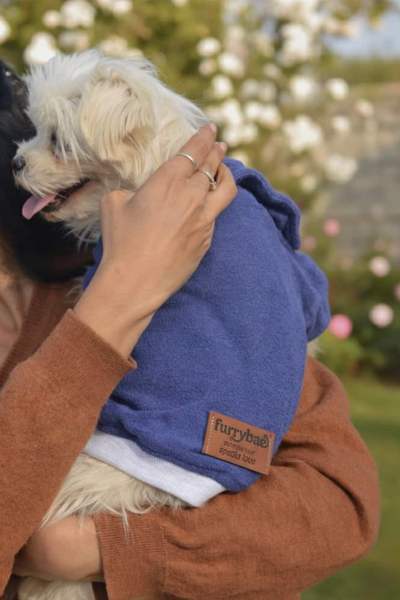
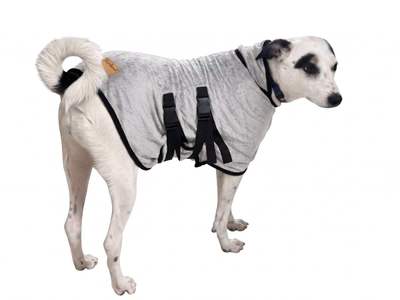
That is exactly what we made. Our Dog T-shirt is 100% bamboo cotton at 240GSM in a soft terry knit. It takes the chill off without trapping heat, and it is light enough that most dogs forget they are wearing it. If your room runs properly cold, or your dog loves to burrow, our hoodie adds a little more coverage in the same fabric.
Fabric matters here more than people think. Polyester and acrylic, common in cheaper dog clothes, hold heat and can feel rough. In a cool room that is swinging between cold air and a warm body, you want a fabric that breathes.
How should indoor dog clothes fit?
Close enough to stay put, loose enough to move in. The AKC says a well-fitting sweater should let your dog move normally, and warns against clothes that are too tight or so big they tangle. Your dog should be able to walk, sit, lie down, stretch and toilet without anything pulling.
Measure before you buy. Take the neck at its base, the chest at its widest point and the back from the neck to the base of the tail, with your dog standing. Then match the numbers to our size guide, which lists every size in inches, from S to XXL.
Go by the tape, not the breed or the weight. Two dogs of the same weight can need completely different sizes. If your dog falls between two sizes, go up.
When should the T-shirt come off?
When the job is done. Take it off when the AC goes off, before you head out into the heat, and straight away if your dog starts panting or seems uncomfortable. The AKC also suggests not leaving a dog unattended in a sweater, so check on them regularly, especially for the first few wears.
A dog who is warm enough will usually tell you. They stretch out instead of curling up, they choose the floor again, or they start to pant. Any of those means the layer has done its work for now.
Keep it clean between wears. Our care guide keeps it simple: machine wash cool, skip the bleach and dry it in the shade.
How do you get your dog used to a T-shirt?
Slowly, with treats. Put it on for a few minutes at a calm moment, praise your dog, then take it off before they get fussed. Next time, leave it on a little longer. Most dogs settle quickly once they realise it is soft and does not stop them doing anything. Some take a few tries.
Choose your moment well. After a walk or a meal, when your dog is already relaxed, works better than when they are excited. Put the shirt over the head gently, guide the front legs through one at a time, and keep your voice easy.
If your dog freezes, walks strangely or keeps trying to back out of it, take it off and try again another day. It should feel like a cuddle, never a costume.
Which facts and sources support this article?
Every factual statement above is paired with its source below. PetMD’s vet-written guide covers which dogs get cold and the signs to watch for, the American Kennel Club covers sweaters, fit and supervision, and our Amazon listing describes the T-shirt. Follow any link to read the original for yourself.
| Factual claim | Scope and source |
|---|---|
| Small dogs get colder faster than large dogs, and thin dogs chill quickly because body fat insulates. | Vet-written guidance: PetMD, How Cold Is Too Cold for Your Dog? |
| Puppies, seniors and dogs with health problems cannot regulate their body temperature as well. | Vet-written guidance: PetMD, How Cold Is Too Cold for Your Dog? |
| Signs of a cold dog include shivering, whining, slowing down, seeking warm spots and holding up paws. | Vet-written guidance: PetMD, How Cold Is Too Cold for Your Dog? |
| Small, toy, short-coated, lean, hairless, shaved, young and senior dogs can benefit from sweaters. | Owner guidance: American Kennel Club |
| Sweaters are usually less warm than jackets and more comfortable indoors, should allow normal movement, and should not be worn unattended. | Owner guidance: American Kennel Club |
| Our Dog T-shirt is a breathable 100% bamboo cotton layer made for AC rooms, sizes S to XXL. | Product listing: Amazon India |